

nolan’s ‘the odyssey’
spoilers - my review of christopher nolan’s adaptation of ‘the odyssey.’

After seeing one too many “this is the best movie ever made” videos, I had to clock out of the social media reviews because I knew the higher my expectations became, the more likely I was to get disappointed. I just wanted to go and experience it with a fresh and open mind.
So, while trying (and mostly failing) to avoid reviews, I found myself watching one too many videos on how the movie was made, how it was developed, and how it was edited. My wonder grew, and my excitement grew with it.
I did go through a phase in my teenage years, like many others, where I hyperfixated on Greek mythology. I was so fascinated by these stories and the beautiful tales that continue to shape our literature and art to this day. I currently have Penguin’s hardback clothbound edition of The Odyssey sitting on my bookshelf (although I am due a reread).
The Odyssey is an epic poem that has been retold, translated, and adapted countless times over the last 3,000 years, although none as grand and ambitious as Nolan’s treatment.
What is The Odyssey actually about?
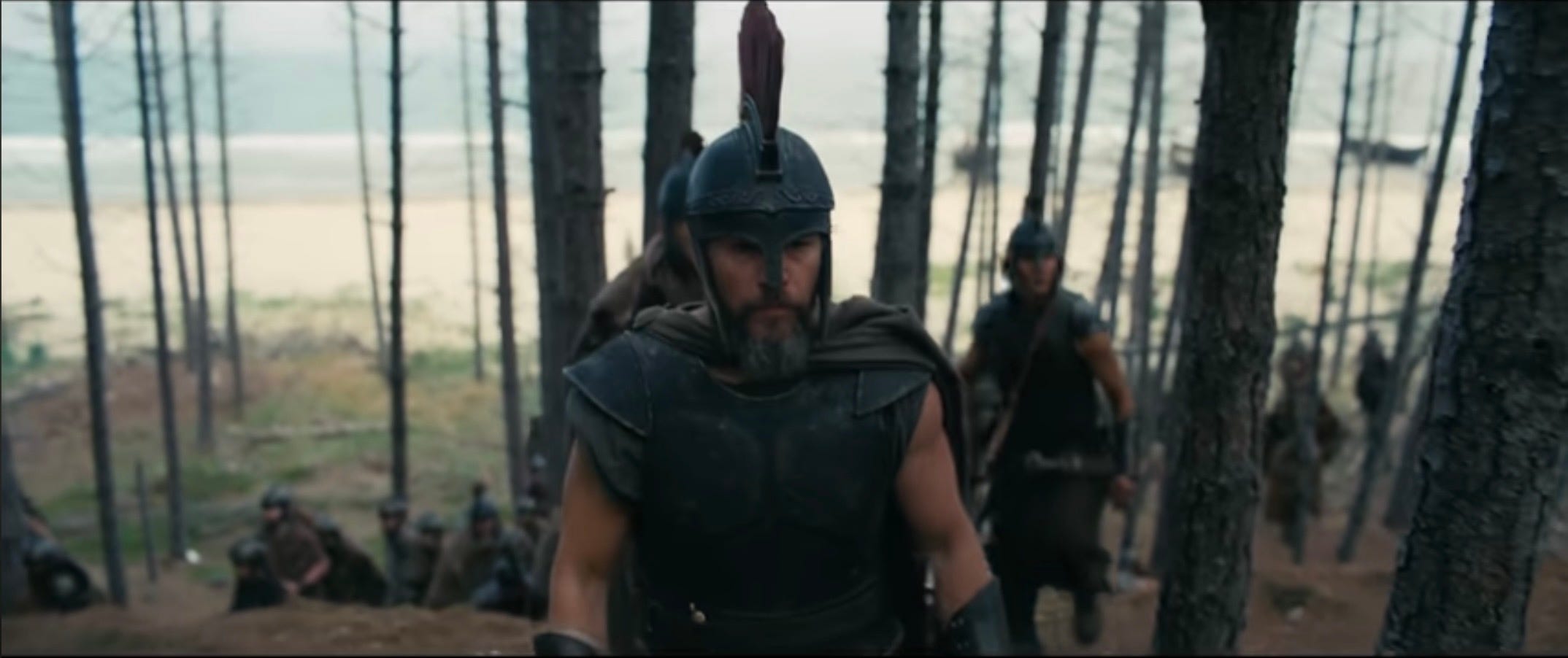
Odysseus (Damon), King of Ithaca, is yet to return home ten years after the Trojan War ended. The Trojan War is a legendary siege of the city of Troy by a coalition of Greek armies. The war began after Helen (Nyong’o), the wife of Spartan King Menelaus (Bernthal), was taken by the Trojan prince Paris.
Using the clever ruse of the Trojan Horse, which posed as a gift to the Trojans, Greek soldiers hid inside it while the rest of the army pretended to sail away. The Trojans were tricked into bringing the horse inside their city walls, ultimately allowing the Greeks to win the war through deception and surprise.
Following their victory, Odysseus endures ten years of misfortune and adventures as he attempts to return home, facing monsters, witches, the wrath of the gods, and other mythical creatures. He eventually ends up as a captive of the nymph Calypso.
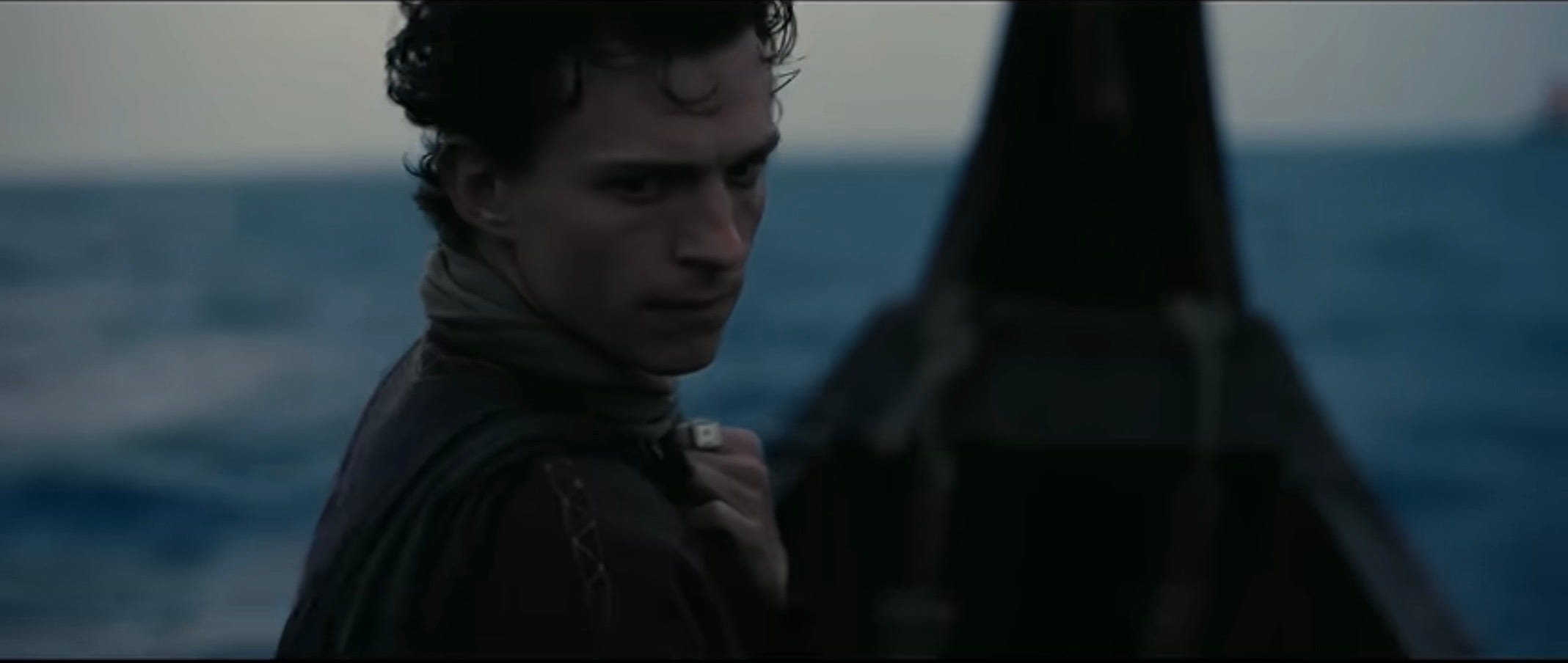
Queen Penelope of Ithaca (Hathaway), who still waits for her husband to return, is besieged by dozens of suitors, but she refuses to remarry. Her son, Telemachus (Holland), leaves home in search of his father, looking for answers.
Let’s talk format
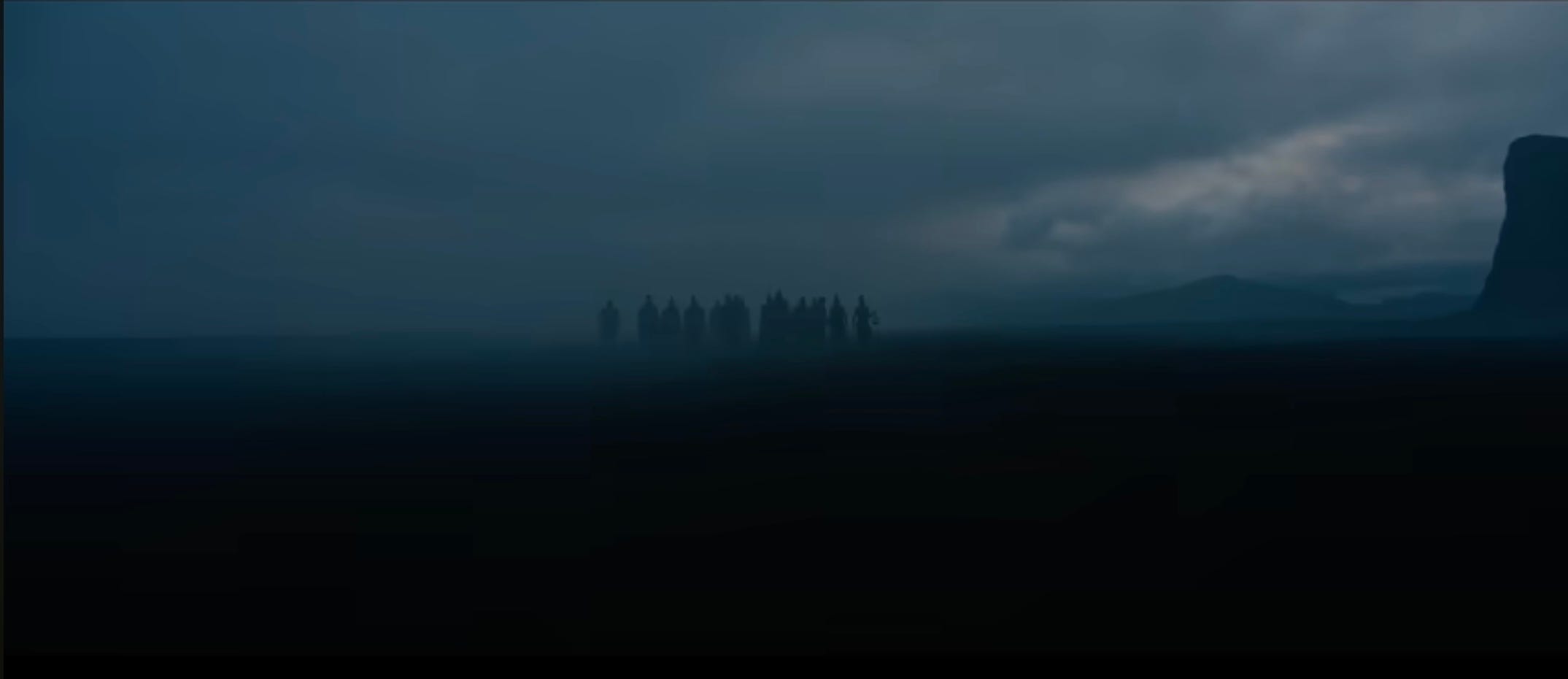
Nolan’s The Odyssey is the first feature film shot entirely using IMAX 70mm cameras. The equipment is highly specialised, and only around 40 theatres worldwide can project the film in its intended format. Essentially, as Anne Hathaway explains, the film was shot and designed to be experienced on the largest screen possible, immersing you fully for the best cinematic experience.
In IMAX 70mm, the film will be presented in IMAX’s 1.43:1 Expanded Aspect Ratio. Each film frame has 15 perforations and runs horizontally through the projector. It is the largest and highest-resolution format available.
I’ve actually seen quite a lot of discourse and upset surrounding how much you miss out on when watching The Odyssey in any other format. Particularly with regular 35mm screens, where a large portion of the image is cropped from either side of scenes.
I would love to know more about aspect ratios in cinema and why cinemas cannot scale to fit, allowing people who don’t have access to IMAX 70mm to still experience the full scale of the film as it was intended.
I can’t move on without mentioning the editing process, as it was utterly insane. The Odyssey was put together almost entirely by hand.
Two million feet of IMAX film was shot for The Odyssey. That’s 378 miles of film and 100 hours of footage that needed to be cut down to three hours. The film was scanned into a computer and edited using software, but rather than producing a finished movie, once the edits were locked, the computer produced a list of numbers. This list was essentially instructions detailing where to cut the negatives.
The film then went to a lab in Burbank because it is the only lab left on Earth that can still perform this process. The original film is then cut and glued by hand using a glue pot and splicer. This is done for every single cut in the movie. There is only one original negative, so if a mistake is made, the film is essentially gone forever.
The colour grading was also done by hand, with filters being held up against the film on a light table until Nolan was satisfied with the result. Valves then open and close to physically expose the print with light. It is run through a chemical bath and dried in a glass enclosure.
This process is done reel by reel, leading to a finished print that weighs 600 pounds, stretches 11 miles long, and costs around $80,000.
A team then has to build it onto two different platters for the IMAX 70mm projector, which only around 90 people on Earth know how to operate.
This film is going down in history.
While I am utterly fascinated by the way this film was made, appreciate the level of artistry and history being created through this process, and have delved so deeply over the last few days into the incredibly unique way this movie was filmed and edited, I’ve found myself having an internal debate.
On one hand, this is pure artistry. It is so far beyond anything most people can comprehend, and Nolan has created a film so meticulously thought through and built, doing something that has never been done before. It is amazing to watch and also to learn about. Even while watching it, I couldn’t help but marvel at every single scene and everything that went into creating it. It’s pure cinema.
On the other hand, I do have to address that, with such a limited number of people being able to see it in its intended format - with large amounts of the image inaccessible to the average cinema-goer, tickets selling out months in advance, and resales reaching astronomical prices - I have found myself wondering whether this new cinematic experience might be rooted in elitism, contradicting the idea that cinema and art should be accessible to all.
I’m not necessarily upset that I didn’t get to experience it in Nolan’s intended format, but part of me is not entirely impressed by the idea that this movie was essentially created for a very small group of people, both geographically and economically.
I, myself, saw it in regular IMAX. I would have loved to see it at the BFI, but I am out of the country and had to settle for the only IMAX screen in my city (I believe the aspect ratio was 1.90:1). This means 24.7% less vertical image height than the intended format. For those watching in regular widescreen format, that’s a 40% loss.
The movie itself
There’s no denying that this is a movie of epic proportions. We’ve heard and read that line almost a million times, but it genuinely is grand and unlike anything you’ve seen or will see again. The experience was mind-blowing, and for three hours, I felt myself glued to the screen, never experiencing boredom or losing my attention for even a moment.
It is loyal to its source material, adapting the mythical creatures and characters we know all too well in a way that I believe is expertly crafted. While it remains faithful to the original story, it also offers an incredible alteration to Odysseus’ character, as he grapples with what he and his men have done during the war, dealing with the shame and guilt that follows him as he revisits his journey home and comes to terms with the horror and violence they committed while “breaking Zeus’ law” that once held their civilisation together.
I believe that, regardless of the mythical aspects of the story, Greek mythology, and The Odyssey in particular, has always been a very human story about mankind. However, this adaptation offers even more depth and humanity, reminding us why the story remains as relevant and important as ever.
This haunting and beautiful masterpiece was punctuated by elements of horror. Without ever relying on CGI, intense body horror is somehow masterfully woven throughout the film, creating moments that feel almost difficult to look at.
Particularly, Circe’s (Morton) scenes reminded me of the moment in Spirited Away where the parents are transformed into pigs. It was disgusting and perfect at the same time. As the men shovel meat and food into their mouths, Circe transforms them into pigs. We watch as their bodies contort, stretch, and change, while meat and broth spills from and fills their mouths.
I had to stop myself from looking away because, alongside the cringe-worthy (in the best possible way) body horror, comes the complexity of Circe’s character and her rage towards men and soldiers. While we are watching this story largely from the perspective of these characters, you can’t help but understand and sympathise with the witch. Her anger feels rooted in something so many can understand.
Another scene that felt horror-adjacent was the Cyclops sequence.
There are always worries with character designs, especially when creating something so unreal, that it may cross the line into feeling silly and ultimately break immersion. I’ve seen it many times in films where I can’t help but scoff at the design of a character, particularly monsters in horror films, because the visual choices end up pulling me out of the experience. This was absolutely not the case with Nolan’s The Odyssey, despite my worries.
The Cyclops was both horrifying and expertly crafted. What makes the scene even more powerful is the contrast between viewing this terrifying monster and witnessing the pain and suffering after he is attacked in his own home. Watching him wail and beg to his father, Poseidon, creates the same emotional push and pull as the Circe scene. We are afraid of him, but we also understand him.
I think this naturally leads us onto sound design, as that was personally my favourite part of the film. I am a musician, so scoring and the way sound, silence, and music are used not only to elevate a film but also to tell a story has always fascinated me. We feel so intensely through sound, and the way it is used as an instrument in this film is unbelievable.
Composer Ludwig Göransson worked with historians to recreate Ancient Greek instruments for the score, resulting in a movie that features instruments that no longer exist today. Just another groundbreaking aspect of this film.
He was banned by Nolan from using a traditional orchestra, so instead crafted the soundtrack using 35 bronze gongs, industrial scrap metal, synthesizers, and the aforementioned revived ancient instruments such as the aulos and lyre. The score also leans heavily into the epic poem’s roots by featuring vocals that add emotional pacing and storytelling to the music.
Aside from the fact that the music itself is breathtaking, the sound design is utterly overwhelming and heartbreaking. The tension never lets up, and I found myself clutching my chest on multiple occasions purely because of the physical response the score created. Polyphemus’ wail was an echoed, painful, hyper-realistic vocalisation that almost sounded like music itself. There were often moments during violence and battle where the sound alone felt like earth-shaking, immersive effects blended with traditional musical composition.
It felt as though the world was truly ending, and I was completely taken by the scale of it all.
A ginormous set filled with thousands of people on screen, combined with a growing, unsettling, and completely overwhelming score in the background, made me feel as though I was standing on that battlefield alongside the characters.
“Another Name,” one of the tracks from the score, made me indescribably emotional. The way the tension and pain build within the music, creating that feeling of pressure in your chest, can only come from the most masterful musicians. I have to repeat: it was my absolute favourite aspect of this film.
The performances were as incredible as you would expect when an established actor is asked to work on a Nolan set. It felt as though every performer pushed themselves to their physical and emotional limits in order to provide the level of commitment you would expect from a movie of this scale.
Matt Damon was out of this world. I don’t like to place too much value on awards when it comes to cinema, but I would love to see him recognised in the Best Actor category next year. There is one particular scene where he is tied to a mast at sea as they pass the sirens that completely moved me.
He brings so much complexity and depth to this role, balancing a man who led an army of men driven by primal, violent urges through a brutal war, while also portraying someone who is intelligent, loyal, and deeply human in the guilt, grief, and shame that follows him throughout the ten years after.
Robert Pattinson as Antinous was another standout performance.
I am always impressed by Pattinson and the way he completely throws himself into his characters. Every twitch of his mouth, every look, every exchange feels intentional. We see every thought pass through his mind, and we can’t help but despise him while simultaneously remaining fascinated by his presence.
I also want to mention Himesh Patel as Eurylochus, who despite barely being seen in press, had a very large role in this film, and I found him to be incredible in it.
I’ve seen a lot of debate surrounding the modern, Americanised language used in this movie. I think we are so used to hearing British accents and more traditional dialogue in films like this that hearing phrases like “dad” rather than “father” can initially feel slightly jarring.
The use of the adjective “fucking” especially took me aback both times I watched it.
However, I can also understand why Nolan made this choice. The Odyssey has been retold, translated, and adapted countless times throughout history. It has become so much more than simply a Greek myth - it has become a story that belongs to the world.
Nolan’s The Odyssey, while remaining loyal to the original text, is also making a stylistic choice. It is not simply a historical tale; it is a story about lust, violence, power, PTSD, and the experience of returning home after battle. These ideas are not unfamiliar to us now. This is a story that remains important because the struggles and mistakes it explores continue to happen today.
There is a reason this story has been taught, interpreted, and reinterpreted for over 3,000 years.
“Dad” and “mom” might feel slightly strange at first in the context of this movie, but they also help these characters feel like real humans rather than distant figures from mythology.
This also applies to the casting.
The backlash against the casting of people of colour, or against Elliot Page, a trans actor, playing the role of a soldier because it is supposedly not “historically accurate”, is ultimately irrelevant because The Odyssey is a work of fantasy and mythology.
Nolan is not attempting to create a documentary about Ancient Greek military history. He is bringing one of humanity’s greatest stories to a modern audience in 2026.
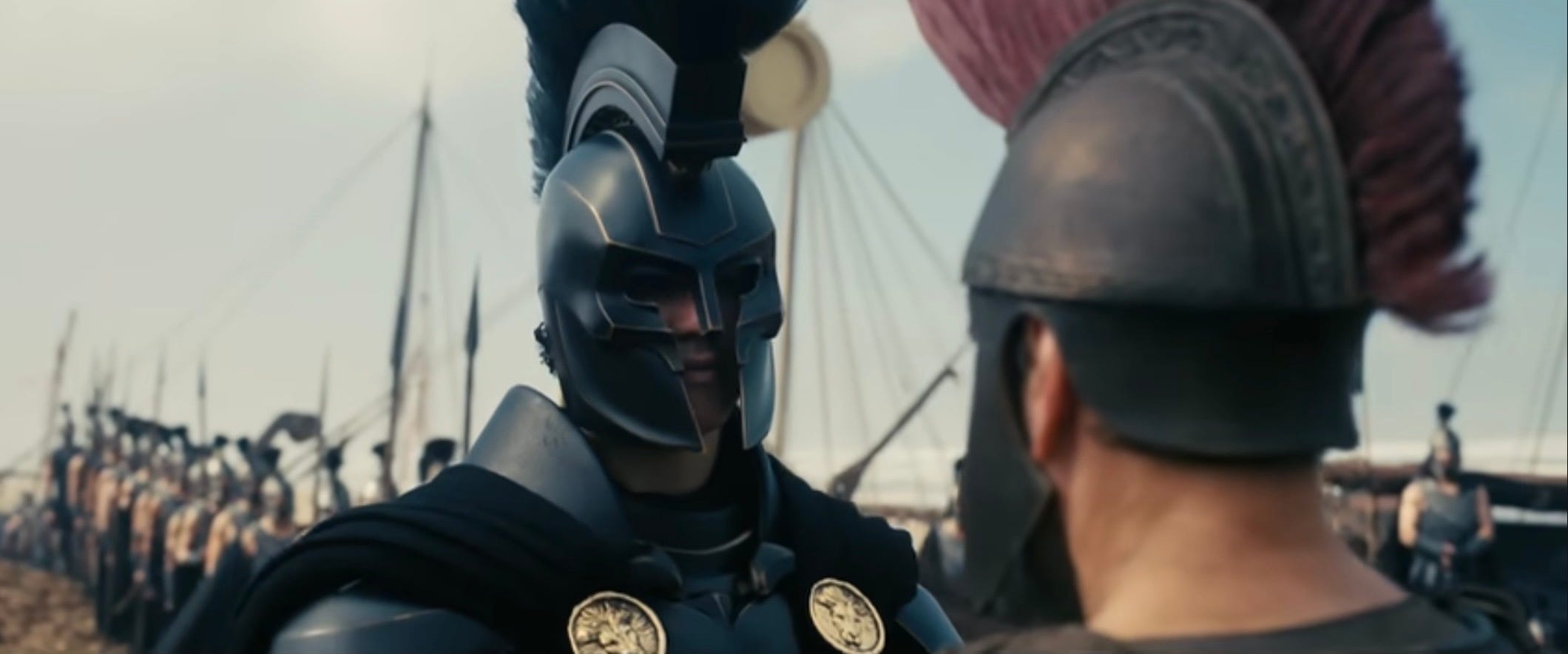
Sinon (Page) likely has around five lines in the entire film. He is important to the story, particularly as the soldier responsible for granting the Trojans the horse, but he is never portrayed as a legendary warrior. His importance comes from his bravery and willingness to sacrifice himself for his people.
Ultimately, Nolan perfectly captures the enduring historical truths of war and humanity.
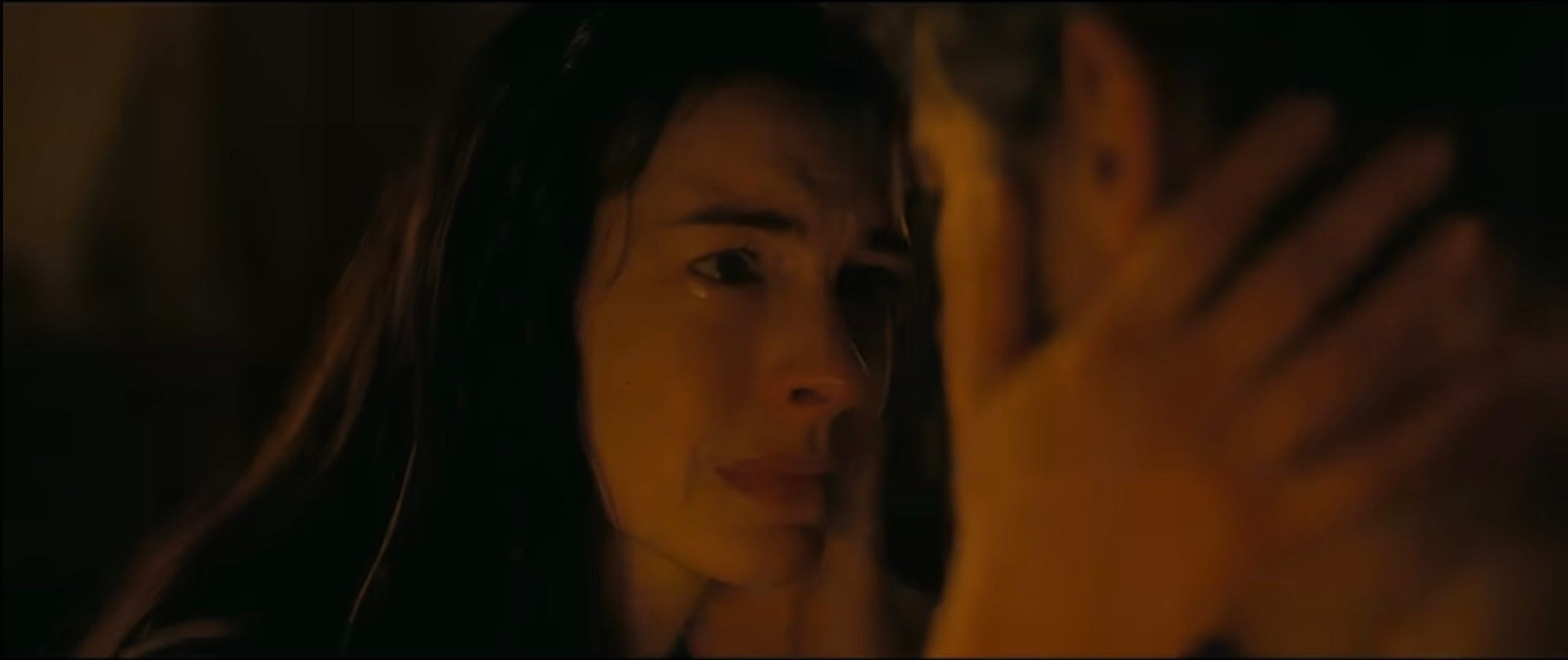
Odysseus’ final monologue to Penelope is the culmination of this theme. He explains why he did not return sooner and describes the way his experience changed him, as he realises that you cannot go through something as devastating as war and return to the world unchanged.
It is an agonising portrayal of impermanence - the feeling of returning home while no longer being the person who left.
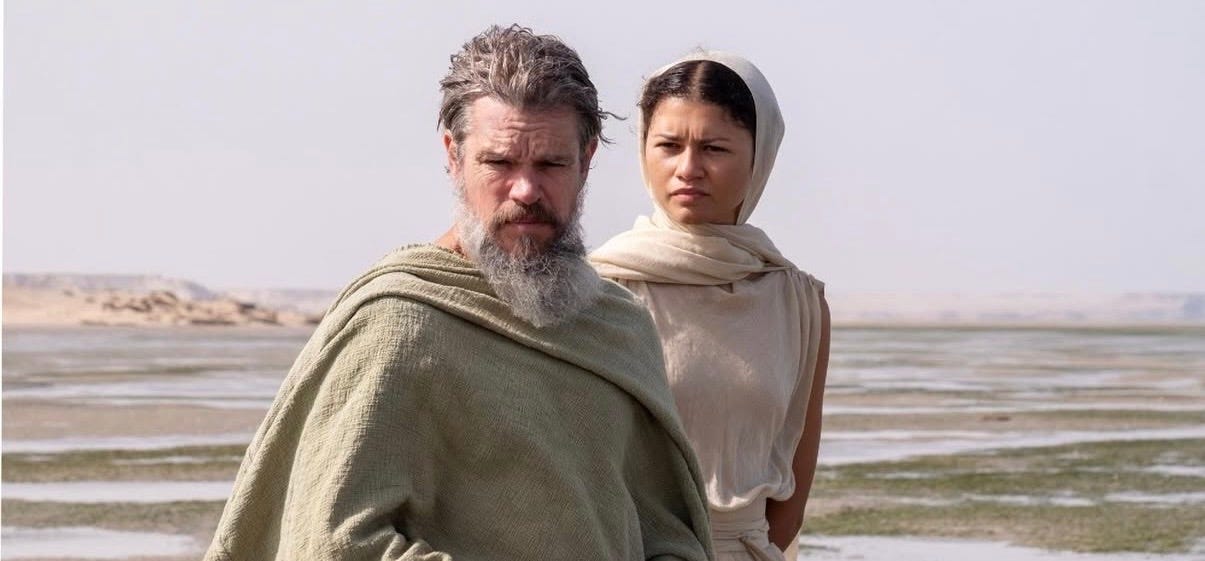
During this monologue, we also see Athena (Zendaya), who appears several times throughout the film beside Odysseus as a stripped-back, psychologically ambiguous presence. She acts as both a guiding voice and a haunting memory.
I couldn’t stop thinking about why the goddess takes the form of the girl Odysseus watched beg for her life in Troy before his soldiers slaughtered her. As she is ruthlessly killed, we watch the statue of Athena’s head being destroyed.
My interpretation was firstly that this represented the physical destruction of everything civilisation had worked to build. Zeus’ law, unity, and peace were destroyed in that moment. The very foundations that held their society together were broken.
Secondly, I saw Athena as a physical manifestation of Odysseus’ guilt. When he sees this haunting version of Athena, he is forced to confront the memory of the innocent girl who was murdered before him in battle, and the moment when it became clear what he and his men had done.
While, historically, there have been many instances of gods and goddesses taking the forms of humans in mythology in order to test or guide them, I am more convinced by this interpretation.
Partly because I think it makes the story darker and more complex, but also because it strengthens the message behind the film. Athena becomes less of a divine figure and more of a reminder of the humanity Odysseus lost along the way.
After the first and second acts, I truly did not think The Odyssey could get any better or more exciting.
The third act was thrilling beyond belief. Queen Penelope’s challenge leading into the confrontation between Odysseus and the suitors was the moment I knew, without a doubt, that this film would receive five stars from me.
There were so many layers, moments, and characters involved, but everything was executed in a way that kept your attention completely. The moment Odysseus picks up his bow and Penelope turns her head, I felt myself buzzing with excitement.
There is always that fear with a three-hour movie that, by the time you reach the ending, you begin to lose focus. Somehow, the opposite happened here. The final act gripped me even more.
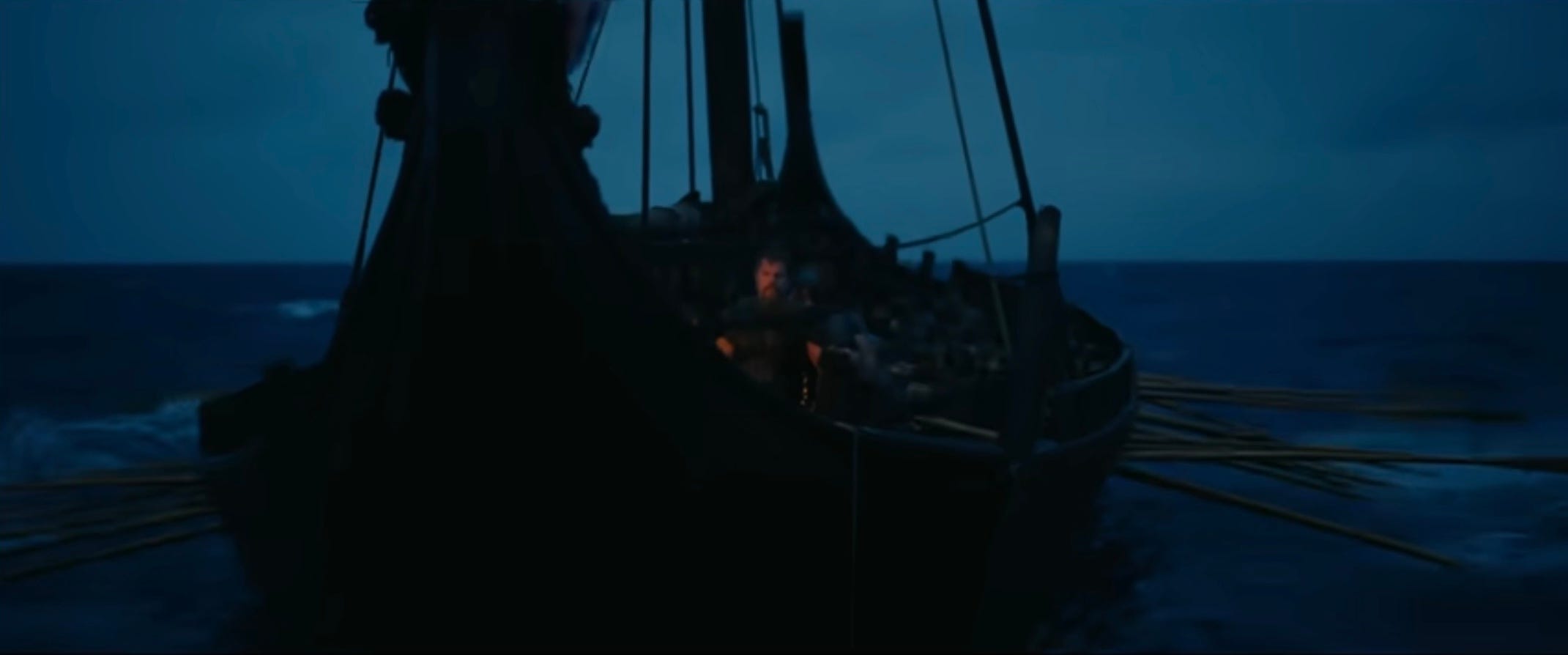
Right up until the moment Odysseus and Penelope sail away together, chasing the escaping sun and leaving Telemachus to rule as king, I was completely glued to the screen.
It upsets me that I will never be able to watch this film for the first time again.
This movie is 100%, without competition, and by far my favourite film of this year - maybe even one of my favourite films in years.
The Odyssey is a reminder of the complete and utter artistry of filmmaking. You cannot watch a movie of this scale and beauty and not appreciate just how incredible it is, both in the process of its creation and in the final product.
It is inspiring, and almost heartbreaking, to think about the fact that I will never experience being a part of something like this.
Not to repeat myself, but this is epic, ginormous filmmaking of the highest order, and I am certain that it will go down in history.

I host a film club - join us!
stara film club: all you need to know

before i get into everything, i want to say a massive thank you. i started my substack over a month ago and i’m so grateful i did. i am so excited to actually get to launch stara film club and begin growing this community with all of you! please subscribe for updates - i also post reviews, recommendations, essays, and so much more on all things film!
I’m seeing it tonight be your article was the perfect way to work up some excitement and anticipation.
I'm glad to see that more people liked it. I have many friends who didn't appreciate how the movie doesn't stick to the original books, but I actually found Nolan's interpretation perfectly suited for a film. I also loved the conversation with Penelope once Odysseus goes back to Ithaca. That made me wanna write a post about my reflections.
You can find it here: https://giuliofaldetta.substack.com/p/the-cost-of-breaking-trust?utm_source=share&utm_medium=android&r=8pja2c